
Evidence with the status
clearly stated.
MammoGRIP® clinical evidence is presented as an evolving body of investigation and education. Preliminary findings are described in their approved context and are not presented as definitive efficacy claims.
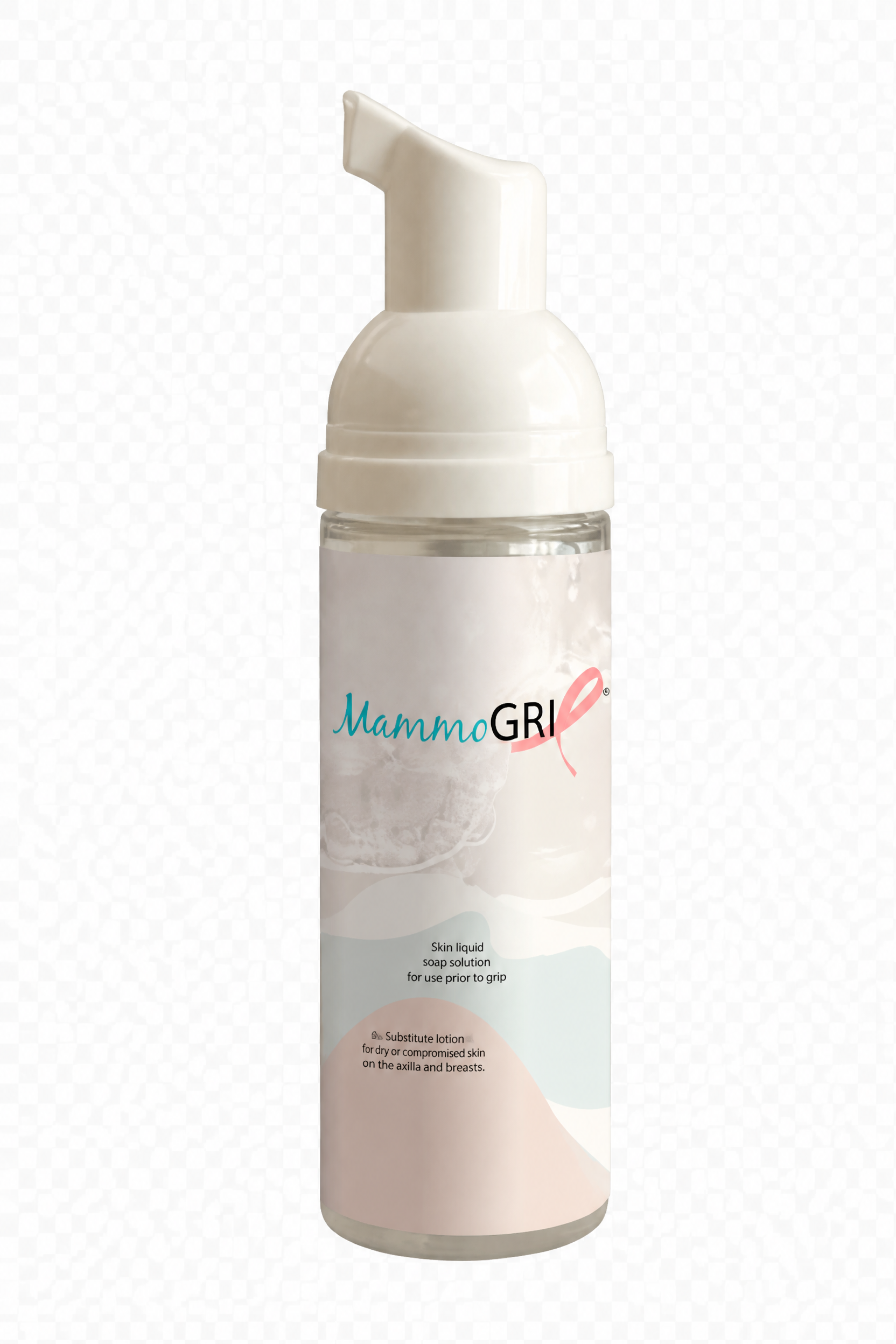
An ongoing single-center pilot investigation
Goldfischer M, Weiselberg C, Kim H, and Williams K are investigating MammoGRIP® in a within-subject paired design at a single center. The investigation includes n=50 women ages 40–75 and uses McNemar’s test for the paired analysis.
The investigation examines positioning-related image criteria, including inframammary fold visualization, nipple profile, skin-fold absence, and pectoralis muscle visualization on the mediolateral oblique view.
Ongoing single-center pilot investigation. Peer-reviewed publication planned following completion of the clinical investigation and final analysis.
These figures remain tied to the ongoing investigation and its stated design. They should not be interpreted as a completed, multicenter, or definitive clinical outcome.
The experience of the examination matters
The Portugal study included n=62 women in the Lisbon region, with 14 in-depth interviews. The approved participant-reported context is shown below without converting experience findings into promises about any individual examination.
reported reduced discomfort
reported less manipulation
reported greater confidence
felt the technologist was confident during the examination.
of technologists identified an issue with MammoGRIP® use in the approved study context.
The wider positioning and patient-experience context
Spuur et al., European Journal of Radiology, 2018
Published literature reported a 52.4% global average for inframammary fold visualization in the cited context.
Whelehan et al., Breast, 2013
A systematic review reported that 25–46% of women who do not return for screening cite pain as a reason.
Prieto et al., Radiography, 2015
The cited literature reports that 49% of retakes were associated with positioning.
Bassett et al., Radiology, 2000
The cited literature reports that 20% of image failures were associated with positioning deficiencies.
Educational context only. Literature findings are not automatically attributable to MammoGRIP® and should be interpreted with the original publications.
Infection-control and glove guidance is not product-efficacy evidence
Infection-control decisions depend on the patient, the procedure, anticipated exposure, and institutional policy. Hand hygiene remains essential, and gloves remain appropriate whenever clinically indicated or required by local policy.
This educational section does not establish product efficacy, replace institutional infection-control policy, or provide medical or regulatory advice.
Continue to MammoGRIP® technologyThis page is intended for educational purposes and does not constitute medical, infection-control, or regulatory advice. Preliminary findings remain subject to completion of the applicable investigation and final analysis. Institutional policies and professional judgment take precedence.